

Cape Verde is an island nation located in the Atlantic Ocean off the west coast of Africa. Although not widely known as a wine-producing country, Cape Verde has a small but distinctive wine industry centered on volcanic islands.
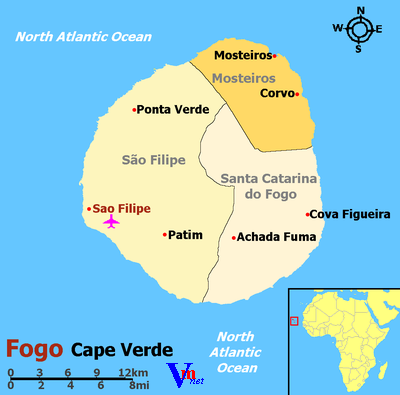
Wine production in Cape Verde is limited and highly localized, with vineyards primarily found on the island of Fogo. The island's volcanic soils and elevation create unique growing conditions that differ significantly from mainland African regions.
Viticulture in Cape Verde has developed on a small scale, producing wines mainly for local consumption, with some limited export.
Fogo is the only significant wine-producing area in Cape Verde. Vineyards are located on the slopes of Pico do Fogo, an active volcano, where altitude helps moderate the tropical climate.
Key locations:
Cha das Caldeiras
Portela
Bangaeira
The volcanic soils and high elevation contribute to distinctive wine characteristics.
Cape Verde vineyards grow a limited selection of grape varieties adapted to volcanic and dry conditions.
Local and adapted grape varieties
Portuguese-origin varieties introduced during the colonial period
Cape Verde produces small quantities of:
red wines
white wines
fortified and rustic-style wines
Production is primarily artisanal and focused on local markets.
Cape Verde's viticulture is influenced by:
volcanic soils
high-altitude vineyards
dry climate with limited rainfall
Atlantic Ocean influences
These factors create challenging but unique conditions for grape growing.
Cape Verde is a minor but distinctive wine-producing country, with vineyards concentrated on Fogo Island. Its volcanic environment and small-scale production give it a unique place among African wine regions.