
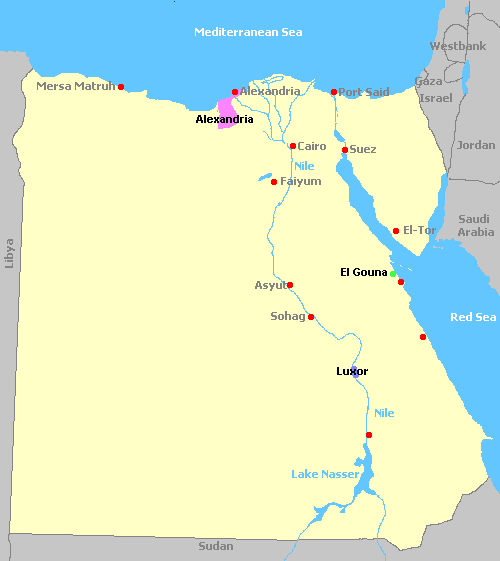
Egypt is located in northeastern Africa and is one of the oldest places in the world associated with viticulture and wine production. Wine was made in ancient Egypt thousands of years ago, particularly in the Nile Delta and areas connected to royal estates and temple agriculture.
Modern wine production in Egypt is much smaller than in antiquity, but vineyards still exist and produce wine on a limited commercial scale. Most modern viticulture is concentrated in irrigated desert and reclaimed agricultural areas rather than in a large traditional wine region system.
Egypt's hot desert climate presents major challenges for grape growing, so vineyards depend heavily on irrigation, careful site selection, and modern vineyard management.
Historically, the Nile Delta was one of the main centres of Egyptian viticulture. In the modern period, vineyard activity remains concentrated in northern Egypt and in reclaimed agricultural land near the Delta.
Key areas:
Alexandria region
Beheira
Monufia
Sharqia
Some modern vineyards are located in irrigated desert areas west and north of Cairo, where controlled water supply makes grape growing possible.
Key areas:
6th of October area
Wadi El Natrun district
desert reclamation zones linked to northern agriculture
In ancient Egypt, wine production was associated with the Nile Delta, oases, and royal agricultural estates. Tomb paintings and amphora inscriptions show that wine was produced, stored, and traded under detailed administrative systems.
Wine in ancient Egypt was strongly linked to religion, elite consumption, and ceremonial use, and the country remains one of the earliest documented wine-producing civilizations.
Modern Egyptian vineyards grow a mix of Mediterranean and international grape varieties suited to hot conditions.
table grape and wine grape plantings adapted to heat
international red and white varieties used in modern commercial production
Modern Egypt produces limited quantities of:
red wines
white wines
rosé wines
Production is relatively small and focused mainly on the domestic market.
Egyptian viticulture depends on:
irrigation-based farming
hot desert climate
low rainfall
vineyard management to reduce heat stress
Without irrigation, large-scale grape growing for wine would be extremely difficult in most parts of the country.
Egypt is one of the oldest wine-producing lands in history, with viticulture documented since ancient times. Modern wine production is limited but continues in northern and irrigated agricultural areas, giving Egypt a small but historically important place in African wine geography.