
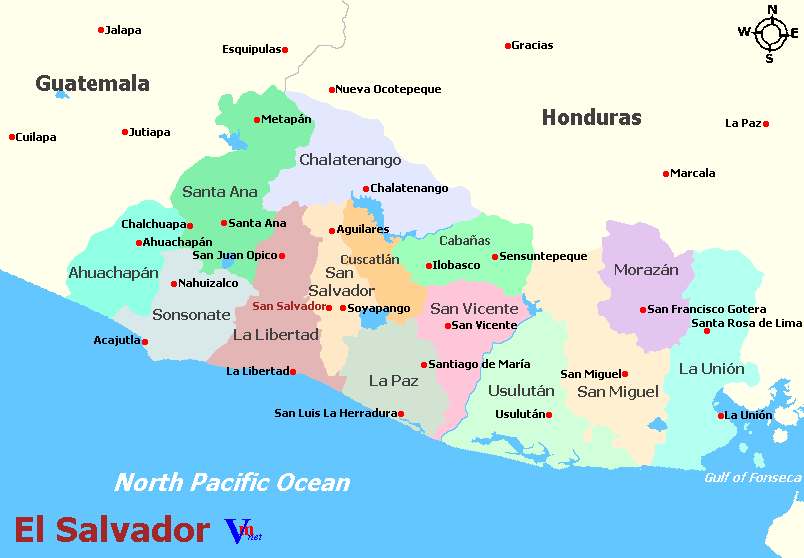
El Salvador is the smallest country in mainland Central America, yet it possesses a rich agricultural and culinary heritage. The country is dominated by volcanic landscapes, fertile valleys, and a Pacific coastline that have influenced local food and beverage traditions for centuries.
Commercial wine production remains very limited, and most wines consumed in El Salvador are imported. However, the country's volcanic highlands and varied elevations have occasionally attracted interest in experimental grape cultivation.
El Salvador is better known for coffee, sugar cane products, and traditional beverages than for vineyard production.
Coffee has long been one of El Salvador's most important agricultural products and is widely considered the country's signature beverage crop.
Major coffee-growing regions include:
Santa AnaThe country's volcanic soils and mountain elevations help produce high-quality coffee that is exported around the world.
One of El Salvador's most distinctive alcoholic beverages is Chaparro.
Chaparro
A traditional spirit distilled from sugar cane and other fermented agricultural products. Production often
occurs on a small scale and has strong links to rural communities and local traditions.
The drink represents an important part of Salvadoran beverage heritage.
Aguardiente
Sugar cane spirits are widely consumed throughout the country and remain common at celebrations and
community events.
El Salvador's warm climate supports a wide variety of fruits that are commonly used in beverages.
mangoThese fruits are used in juices, cocktails, fruit-based alcoholic beverages, and specialty products.
Several beverages are deeply rooted in Salvadoran culture.
Chicha
Traditional fermented beverages have existed in the region since pre-Columbian times and remain part of
local cultural heritage.
Horchata de Morro
A popular non-alcoholic drink made using morro seeds, spices, and other ingredients.
These beverages reflect the country's Indigenous and colonial influences.
El Salvador is often called the "Land of Volcanoes" because of its numerous volcanic peaks.
volcanic mountain rangesThese conditions strongly support coffee and tropical agriculture, although commercial viticulture remains limited.
Imported wines dominate the Salvadoran wine market.
Common imports originate from:
ChileWine consumption has grown in San Salvador and other urban centres as international cuisine and tourism continue to expand.
El Salvador is not a major wine-producing country, but it has a diverse beverage culture shaped by coffee production, sugar cane spirits, volcanic agriculture, and traditional drinks such as Chaparro. Coffee remains the country's most internationally recognized beverage product, while imported wines and local spirits contribute to a growing and varied beverage market.