
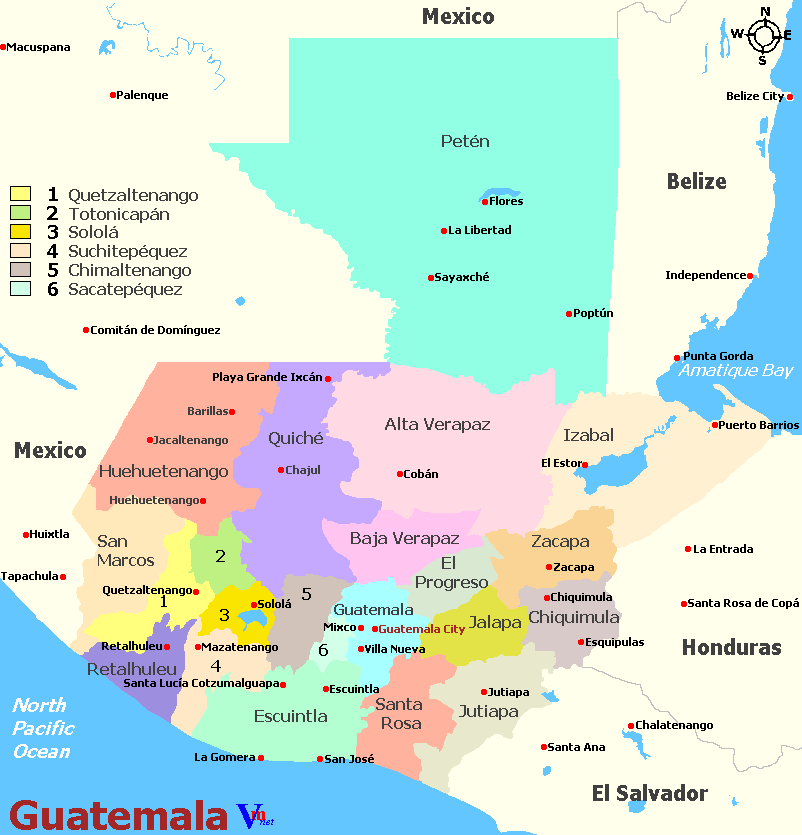
Guatemala is one of Central America's most geographically diverse countries, with volcanic mountains, fertile valleys, tropical lowlands, and high-altitude plateaus. Unlike many neighbouring countries, Guatemala possesses elevated regions where cooler temperatures provide opportunities for limited grape cultivation.
Although Guatemala is not a major wine-producing nation, it has developed small vineyard projects and experimental wineries, particularly in higher elevation areas where conditions are more favourable than in the tropical lowlands.
The country's beverage culture is also strongly influenced by coffee production, sugar cane agriculture, and Indigenous traditions.
Most wine-related activity in Guatemala is concentrated in elevated regions where temperatures are moderated by altitude.
Areas associated with experimental grape growing and specialty wine production include:
Antigua Guatemala regionWhile production remains modest, these areas demonstrate that viticulture is possible in parts of Guatemala's interior highlands.
Guatemala contains more than thirty volcanoes, many of which have contributed fertile volcanic soils that support agriculture.
These soils are especially important for:
coffee production
fruit cultivation
vegetable farming
specialty crops
limited vineyard development
The country's volcanic landscape is one of its defining agricultural characteristics.
Guatemala is internationally recognized for producing some of the world's most respected rums.
Ron Zacapa
One of the best-known premium rum brands in the world. Unlike many Caribbean rums aged at sea level,
Zacapa is matured at high elevations in Guatemala's mountains, contributing to its distinctive character.
The success of Zacapa has brought global attention to Guatemala's spirits industry.
Guatemala's cultural diversity has produced a wide range of traditional drinks.
Aguardiente
Sugar cane spirits remain popular throughout the country.
Fruit-Based Beverages
Fresh fruits are widely used in juices, fermented drinks, and specialty products.
Coffee
Coffee is one of Guatemala's most important agricultural products and a major part of daily life.
Many fruits grown throughout Guatemala can be used in specialty wines and fermented beverages.
mangoFruit wine production remains small but benefits from the country's agricultural diversity.
Few countries in Central America possess such varied growing conditions.
high volcanic mountainsThese variations create opportunities for agriculture that are unavailable in many nearby countries.
Imported wines continue to dominate the Guatemalan market.
Common imports originate from:
ChileWine consumption is concentrated in Guatemala City, Antigua Guatemala, tourist centres, and upscale restaurants.
Guatemala is one of the few countries in Central America where highland conditions allow limited grape cultivation and experimental wine production. Combined with world-class rum, renowned coffee, volcanic soils, and diverse agriculture, the country has developed a beverage culture that is broader and more varied than many people realize.