
Hungary is a historic wine-producing country in Central Europe, with viticulture dating back over a thousand years. The country is known for its diverse wine regions, indigenous grape varieties, and distinctive wine styles, including some of the world's most famous sweet wines.
Hungarian vineyards are located primarily in the western, central, and northern parts of the country, where climate and soil conditions support grape growing. The landscape includes volcanic hills, plains, and river valleys that contribute to regional diversity.
Hungary has gained international recognition for both its traditional wines and modern winemaking developments.
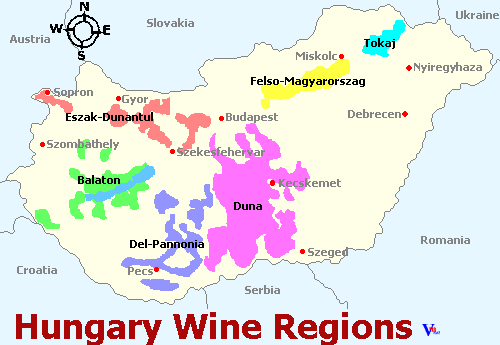
Hungary follows the European PDO and PGI classification system.
PDO (Protected Designation of Origin)
PDO wines come from defined regions with strict production rules. These include well-known regions
such as Tokaj, Eger, and Villány.
PGI (Protected Geographical Indication)
PGI wines cover broader areas and allow more flexibility in grape varieties and production methods.
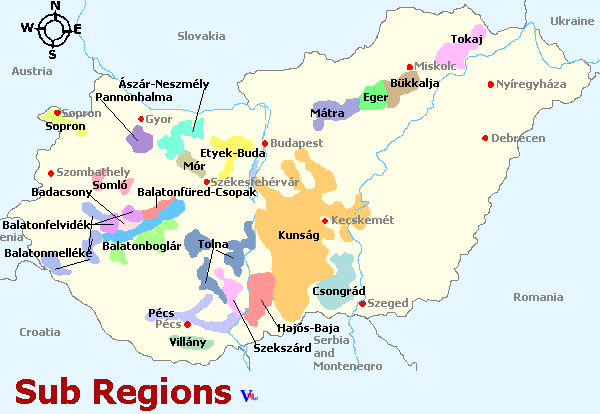
Located in northeastern Hungary, Tokaj is one of the most famous wine regions in the world, known for its sweet Tokaji Aszú wines.
A northern region known for red blends such as Egri Bikavér (Bull's Blood) and also white wines.
A southern region producing full-bodied red wines, often from Cabernet Sauvignon, Merlot, and local varieties.
Known for red wines and blends, including another style of Bikavér.
A large area around Lake Balaton, producing a wide range of white wines.
A small volcanic region known for mineral-driven white wines.
A western region with a mix of traditional and modern wine styles.
A region near the Austrian border known for Blaufränkisch (Kékfrankos) wines.
Hungary grows both indigenous and international grape varieties.
Key white grapes:
Furmint
Hárslevelu
Olaszrizling
Irsai Olivér
Key red grapes:
Kékfrankos (Blaufränkisch)
Kadarka
Cabernet Sauvignon
Merlot
Hungary produces a wide range of wine styles:
dry white wines
full-bodied red wines
sparkling wines
sweet and dessert wines (Tokaji Aszú)
Hungarian viticulture is influenced by:
continental climate
volcanic and loess soils
river systems including the Danube and Tisza
warm summers and cold winters
These conditions support both dry and sweet wine production.
Hungary is a historic and diverse wine-producing country known for its unique grape varieties and world- famous sweet wines. Its regions combine traditional methods with modern winemaking, making it an important part of the European wine landscape.