Wine in Romania
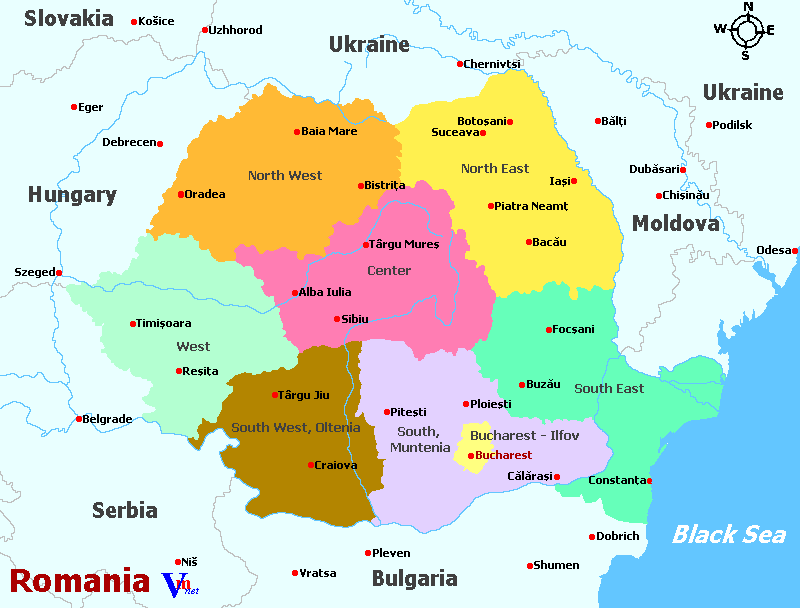
Romania is located in southeastern Europe, bordered by Hungary, Serbia, Bulgaria, Ukraine, and
Moldova, with access to the Black Sea in the east. The country has a long and continuous tradition of
viticulture dating back more than 2,000 years to the Dacian and Roman periods. Today Romania is one of
the largest wine-producing countries in Eastern Europe.
Vineyards are typically planted on rolling hills and plateaus, where soils of limestone, clay, and sand
support a wide range of grape varieties. The climate is predominantly continental, with warmer conditions
in southern regions and moderating maritime influence near the Black Sea.
Romania uses the European PDO (Protected Designation of Origin) and PGI (Protected Geographical
Indication) system, although the traditional term DOC (Denumire de Origine Controlata) is still
widely used and corresponds to PDO-level wines.
Major Wine Regions of Romania
Romanian viticulture is traditionally divided into five main wine-growing regions.
Transylvania
Located in central Romania, Transylvania is one of the coolest wine regions in the country. The climate
favors white grape varieties and produces wines with fresh acidity and aromatic character.
PDO / DOC areas include:
Moldova Hills (Dealurile Moldovei)
This is the largest wine-growing region in Romania, stretching across the northeastern part of the country.
PDO / DOC areas include:
- Cotnari
- Iasi
- Husi
- Nicoresti
- Panciu
- Odobesti
- Cotesti
The region produces both dry wines and traditional sweet wines, especially from Cotnari.
Muntenia and Oltenia Hills
Located in southern Romania between the Carpathians and the Danube.
PDO / DOC areas include:
- Dealu Mare
- Dragasani
- Samburesti
- Segarcea
- Mehedinti
Dealu Mare is considered one of Romania's most important red wine regions.
Banat
Situated in western Romania near the Serbian border.
PDO / DOC areas include:
Banat benefits from a moderate continental climate and produces both red and white wines.
Dobrogea (Black Sea Region)
This eastern region is influenced by the Black Sea and includes some of Romania's oldest vineyards.
PDO / DOC areas include:
- Murfatlar
- Sarica Niculitel
- Babadag
The maritime climate allows for good ripening and aromatic wine styles.
Grape Varieties and Wine Styles
Romania grows both indigenous and international grape varieties.
Important native white grapes:
- Feteasca Alba
- Feteasca Regala
- Grasa de Cotnari
- Tamaioasa Romaneasca
Important native red grapes:
- Feteasca Neagra
- Babeasca Neagra
International varieties such as Cabernet Sauvignon, Merlot, Pinot Noir, and Chardonnay are also widely
planted.
Romanian wines range from fresh aromatic whites and structured reds to sweet dessert wines. The
diversity of climate and grape varieties contributes to a growing reputation for quality.
Summary
Romania is an important Eastern European wine-producing country, combining:
- a long history of viticulture
- diverse regional climates
- strong use of indigenous grape varieties
- a structured PDO/DOC classification system
The country continues to develop its international presence with a focus on both traditional and modern
wine styles.