
Serbia is located in southeastern Europe in the central Balkan Peninsula and borders Hungary, Romania, Bulgaria, North Macedonia, Kosovo, Montenegro, Bosnia and Herzegovina, and Croatia. Viticulture in Serbia dates back to Roman times and developed further during the medieval Serbian kingdoms. Wine production declined during the 20th century but has experienced significant revival in recent decades.
The climate is predominantly continental, with warm summers and cold winters. Vineyards are often planted on hills and river valleys where soils of limestone, clay, and sand support a range of grape varieties. The Danube River basin and surrounding valleys play an important role in Serbian viticulture.
Serbia follows a wine classification system aligned with European PDO and PGI regulations.
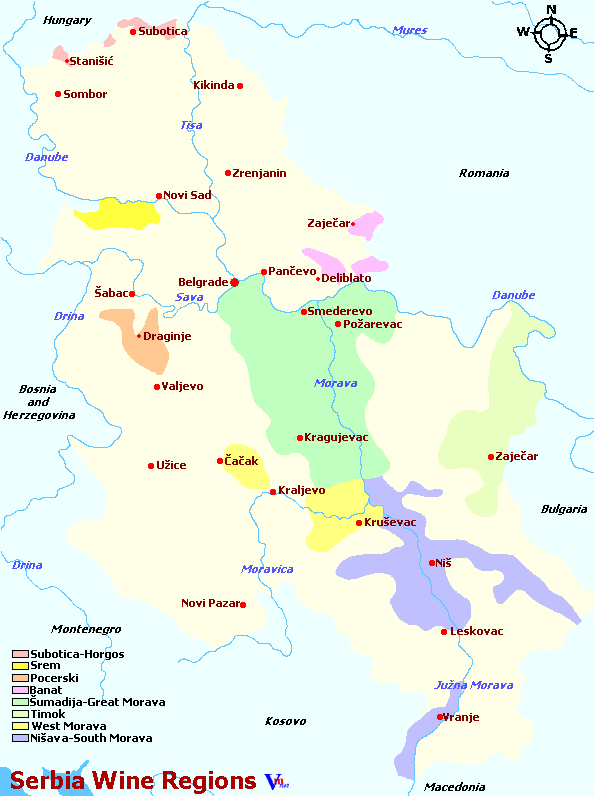
Serbian wines range from fresh whites and structured reds to aromatic wines produced from Tamjanika, a local Muscat-related grape.
In recent years Serbian wineries have increasingly focused on quality production, regional identity, and revival of native grape varieties.