
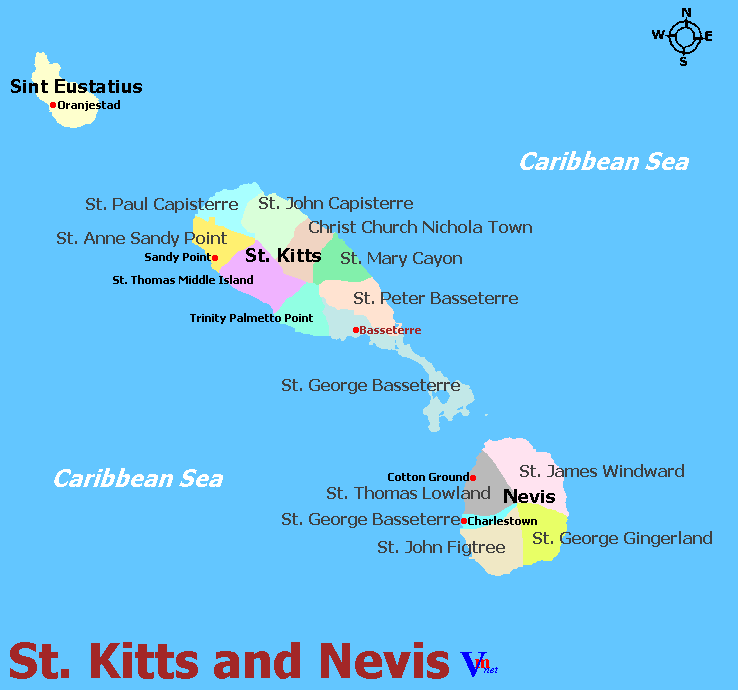
St. Kitts and Nevis is a twin-island nation located in the Leeward Islands of the eastern Caribbean. The country has a long history tied to sugar cane cultivation, which shaped its economy, culture, and beverage traditions for centuries.
Although commercial grape wine production is extremely limited, the islands have developed a strong identity around rum, tropical beverages, and hospitality. Most wines consumed in the country are imported from international wine-producing regions.
Today, tourism has become a major economic driver, helping expand the availability of imported wines and premium spirits.
For much of its history, St. Kitts was one of the Caribbean's most important sugar-producing islands. Vast sugar estates once covered much of the landscape and played a central role in local life.
The sugar industry officially ended in 2005, but its influence remains visible in the islands' culture, historic sites, and beverage traditions.
Rum production and rum consumption continue to reflect this agricultural heritage.
Rum remains one of the most popular alcoholic beverages throughout both islands.
Rum Punch
A classic Caribbean drink commonly served at resorts, restaurants, festivals, and social gatherings.
Cane Spirit Traditions
Various local and regional rum products are enjoyed throughout the country, often accompanied by
tropical fruit flavours and spices.
Rum continues to be closely associated with celebrations, cultural events, and tourism activities.
Nevis has a particularly rich colonial history and was once among the wealthiest islands in the Caribbean due to sugar production.
Historic plantation estates throughout Nevis have been converted into hotels, inns, and attractions where visitors can experience local food and beverage traditions.
Many establishments offer rum tastings and Caribbean-inspired cocktails.
The islands' tropical climate supports a variety of fruits used in beverages and specialty products.
mangoThese fruits are commonly incorporated into juices, punches, cocktails, and occasional homemade fruit wines.
Both islands are volcanic in origin and feature fertile soils and scenic landscapes.
volcanic mountainsWhile these conditions support tropical agriculture, they are generally unsuitable for commercial vineyard development.
Wine consumption has grown alongside the tourism industry, particularly in resort areas and upscale restaurants.
Common imports originate from:
FranceHotels and restaurants in Basseterre, Charlestown, and resort districts often maintain diverse wine selections.
St. Kitts and Nevis is not a wine-producing nation, but its beverage culture is deeply rooted in a historic sugar cane economy that helped shape the Caribbean. Rum traditions, tropical beverages, colonial heritage, and a growing tourism industry combine to create a distinctive beverage identity for both islands.