
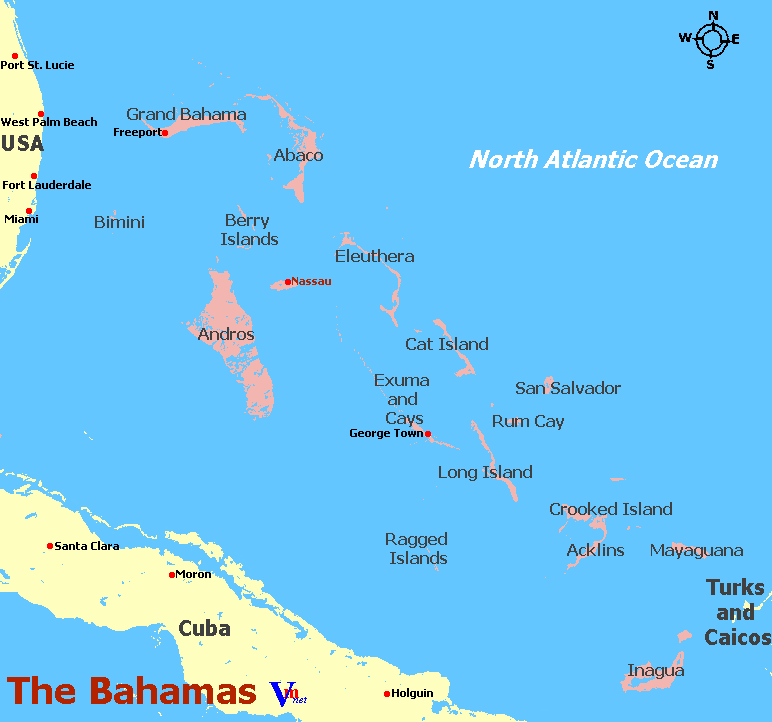
The Bahamas consist of hundreds of islands and cays spread across the Atlantic Ocean southeast of Florida. Unlike traditional wine-producing countries, the Bahamas developed a beverage culture shaped by shipping routes, colonial trade, tourism, fishing communities, and Caribbean hospitality rather than vineyard agriculture.
The warm marine climate, sandy soils, salt exposure, and low elevation make large-scale grape cultivation impractical. As a result, the Bahamas rely heavily on imported wines while developing a strong identity around rum, tropical cocktails, and locally inspired beverages.
Wine is commonly served in resorts, cruise destinations, marinas, and restaurants catering to international visitors.
The Bahamas are especially associated with rum-based drinks and tropical cocktail culture.
Goombay Smash
One of the most famous Bahamian cocktails. It is traditionally made with rum, coconut liqueur, pineapple
juice, and orange juice. The drink became closely associated with the Out Islands and Caribbean tourism
culture.
Sky Juice
A traditional Bahamian drink made using gin, coconut water, condensed milk, and spices. It is strongly
connected to local gatherings, beach culture, and island celebrations.
Bahamian Rum
Rum remains central to the islands drinking culture and is widely used in punches, cocktails, and mixed
drinks throughout the country.
Although traditional vineyards are absent, tropical fruits are commonly used in local beverages and homemade fermentations.
pineappleSome locally inspired drinks and specialty products may include fruit infusions, spiced rum mixtures, or small-batch tropical fermentations.
The Bahamas have environmental conditions that strongly favour tropical beverages over traditional viticulture.
low-lying limestone islandsThese conditions create difficult growing environments for wine grapes but support tourism-oriented beverage industries and tropical agriculture.
The Bahamas import large quantities of wine for hotels, resorts, private marinas, cruise tourism, and fine dining establishments.
Common imported wines originate from:
FranceWine consumption is concentrated mainly in Nassau, Paradise Island, Freeport, and major resort areas.
The Bahamas are not a vineyard-producing wine region, but they have a vibrant tropical beverage culture centered on rum, island cocktails, and imported wines. Bahamian drinks reflect the countrys maritime history, tourism economy, and relaxed Caribbean lifestyle rather than traditional grape-growing traditions.