Baden-Württemberg Wine Region - Germany
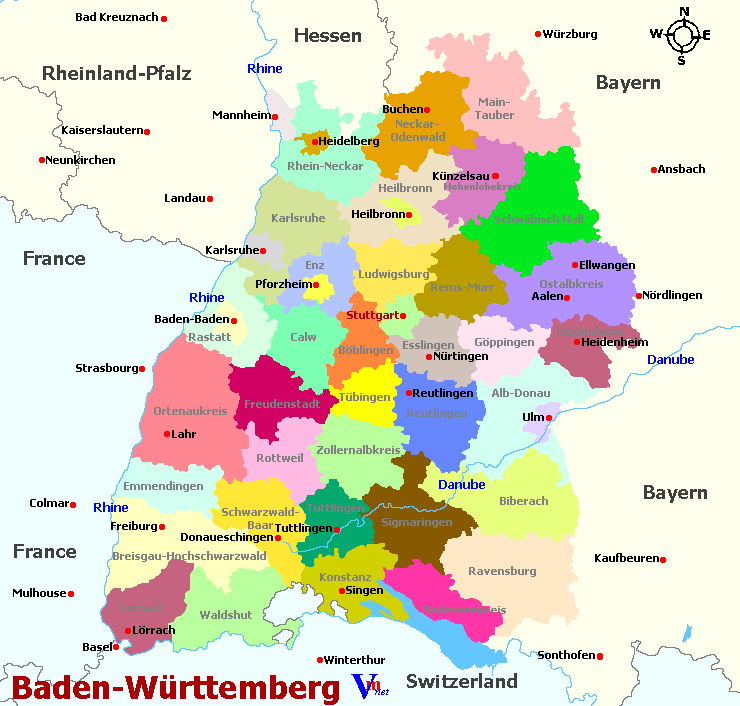
Baden-Württemberg is located in southwestern Germany, bordering France and Switzerland. It is one of
the country's most important wine-producing states and contains two of Germany's 13 official wine
regions: Baden and Württemberg. The region stretches along the Rhine Valley and inland river systems,
benefiting from some of the warmest growing conditions in Germany.
Viticulture in Baden-Württemberg dates back to Roman times. Today the state produces a wide range of
wines, with both traditional German varieties and international grapes grown across varied landscapes that
include river valleys, foothills, and volcanic hills.
PDO Wine Regions in Baden-Württemberg
Baden PDO
Baden is Germany's southernmost and warmest wine region, running along the eastern bank of the
Rhine from the Black Forest to Lake Constance. It is the only German wine region classified largely
within EU Zone C, reflecting its warmer climate.
The region is divided into several sub-areas including Kaiserstuhl, Ortenau, and Markgräflerland. Soils
range from volcanic to loess and limestone.
Common grape varieties:
- Spätburgunder (Pinot Noir)
- Grauburgunder (Pinot Gris)
- Weissburgunder (Pinot Blanc)
- Gutedel (Chasselas)
Baden is especially known for full-bodied Pinot wines and some of the best red wines in Germany.
Württemberg PDO
Württemberg lies inland along the Neckar River and around Stuttgart. The region has a slightly cooler
climate than Baden but is still relatively warm compared to northern German wine areas.
Württemberg is notable for its strong tradition of red wine production, which is unusual in Germany.
Common grape varieties:
- Trollinger
- Lemberger (Blaufränkisch)
- Spätburgunder (Pinot Noir)
- Riesling
Many wines are produced for local consumption, and the region has a strong cooperative system.
Climate and Geography
Baden-Württemberg benefits from:
- warm summers and long growing seasons
- protection from mountains such as the Black Forest
- river valleys that moderate temperatures
- diverse soils including volcanic, limestone, and loess
These conditions allow for a broader range of grape varieties than in cooler German regions.
Wine Styles
The state produces a wide variety of wine styles:
- structured red wines (especially in Württemberg)
- rich, full-bodied white wines (especially in Baden)
- fresh Riesling wines
- elegant Pinot varieties
Compared to northern Germany, wines from Baden-Württemberg tend to be riper and fuller-bodied.
Summary
Baden-Württemberg is one of Germany's key wine-producing states, combining:
- the warm climate of Baden, ideal for Pinot varieties
- the red wine tradition of Württemberg
- a long history of viticulture and diverse vineyard landscapes
Together, these regions represent a major part of Germany's wine identity.