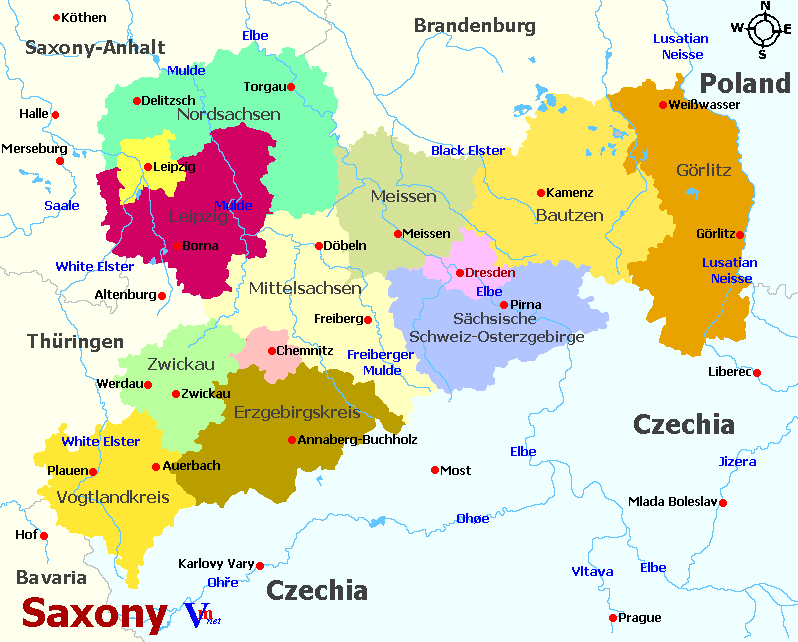
Sachsen Wine Region - Germany
Sachsen is located in eastern Germany along the Elbe River, centered around the city of Dresden near
the Czech border. It is one of Germany's smallest and most northeasterly wine regions and is officially
classified as a Protected Designation of Origin (PDO) within the German wine system.
Viticulture in Sachsen dates back to at least the 12th century, when vineyards were established along the
Elbe Valley by monasteries and local rulers. Despite its long history, the region remains relatively small,
with vineyards concentrated on steep, terraced slopes overlooking the river.
Location and Geography
The Sachsen wine region follows the Elbe River valley, where vineyards benefit from:
- south-facing slopes that maximize sunlight
- sheltered conditions along the river
- granite and gneiss soils that provide good drainage
Because of its northern location, Sachsen has a cool climate, making grape ripening more challenging
than in southern German regions.
Grape Varieties
Sachsen produces a wide range of grape varieties, with a strong focus on white wines.
Important varieties include:
- Müller-Thurgau
- Riesling
- Weissburgunder (Pinot Blanc)
- Grauburgunder (Pinot Gris)
- Traminer
Red varieties such as Spätburgunder (Pinot Noir) are also grown in smaller quantities.
Wine Styles
Wines from Sachsen are typically:
- light to medium-bodied
- fresh and aromatic
- high in acidity
White wines dominate production, often showing floral and citrus characteristics. Because of the cool
climate, wines tend to be elegant rather than powerful.
Classification
Sachsen is one of Germany's 13 official wine regions (Anbaugebiete) and holds PDO status under EU
wine law. Wines are labeled under the German quality system, including:
- Qualitätswein
- Prädikatswein (Kabinett, Spätlese, etc.)
Notable Features
- One of the smallest wine regions in Germany
- Among the northernmost wine regions in Europe
- Known for terraced vineyards along the Elbe River
- Strong local consumption, with limited export availability