
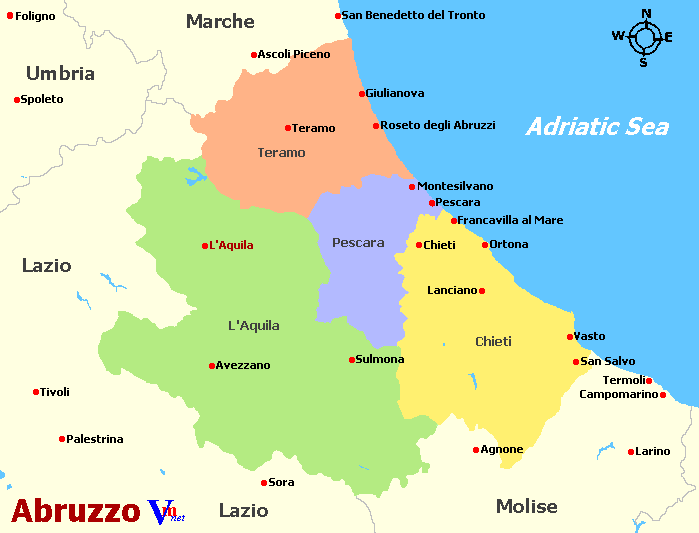
Abruzzo is located in central Italy along the Adriatic coast, bordered by the Apennine Mountains to the west and the sea to the east. The region combines mountainous terrain with coastal plains, creating a variety of growing conditions for vineyards.
Viticulture in Abruzzo has ancient roots, but the region has gained modern recognition for producing high-quality wines at accessible price points. Large vineyard areas and improved winemaking practices have increased its international presence.
Abruzzo is best known for its red wines made from Montepulciano grapes and its fresh, approachable white wines.
Abruzzo follows the Italian DOC and DOCG classification structure.
DOCG (Denominazione di Origine Controllata e Garantita)
The region includes Montepulciano d'Abruzzo Colline Teramane DOCG, known for stricter production standards and higher-quality wines.
DOC (Denominazione di Origine Controllata)
Key DOC wines include Montepulciano d'Abruzzo DOC, Trebbiano d'Abruzzo DOC, and Cerasuolo d'Abruzzo DOC.
The primary wine area covering much of the region, producing red wines from the Montepulciano grape with flavours of dark fruit and moderate tannins.
A smaller, higher-quality zone in the northern part of the region known for more structured and age-worthy wines.
Produces fresh white wines with moderate acidity and light fruit character.
Known for rosé wines with deeper colour and more body than typical rosé styles.
Abruzzo focuses on a few key grape varieties.
Key white grapes:
Trebbiano
Pecorino
Passerina
Key red grapes:
Montepulciano
Sangiovese
Abruzzo produces a range of approachable wine styles:
medium to full-bodied red wines
fresh white wines
structured rosé wines (Cerasuolo)
Viticulture in Abruzzo is influenced by:
Adriatic coastal climate
cooling mountain air from the Apennines
rolling hills ideal for vineyards
good sun exposure with temperature variation
These conditions help balance ripeness and acidity in the grapes.
Abruzzo is a key Italian wine region known for Montepulciano-based reds and fresh white wines. Its combination of coastal and mountainous influences supports consistent production and a growing international reputation.