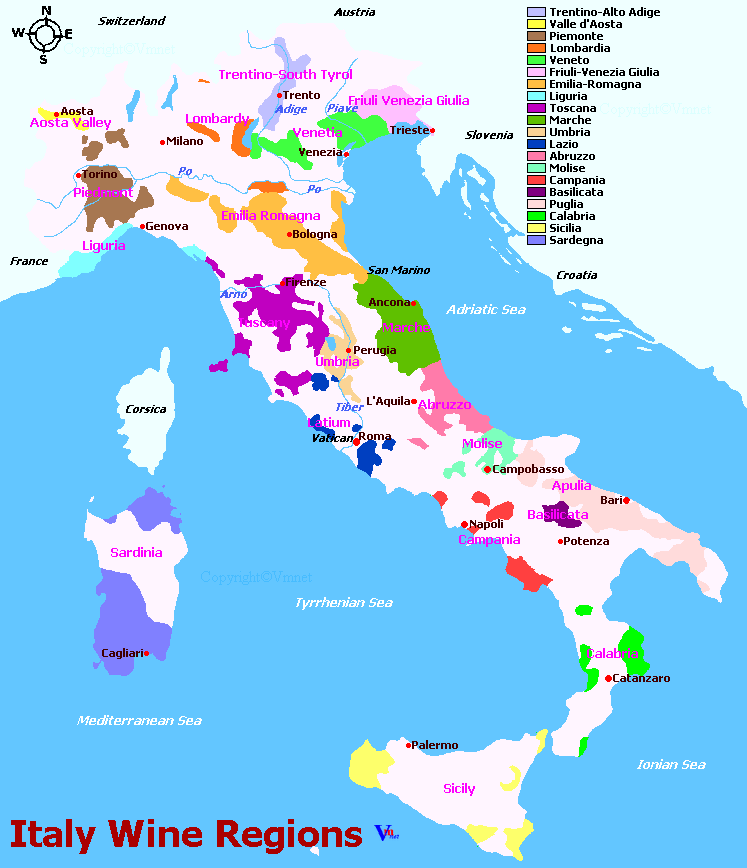
Italy is one of the largest and most diverse wine-producing countries in the world, with a history of viticulture that dates back thousands of years. Wine is produced in every region of the country, from the Alpine north to the Mediterranean south and islands.
Italian vineyards cover a wide range of climates and landscapes, including mountains, rolling hills, coastal plains, and volcanic areas. This diversity allows for a broad spectrum of wine styles and grape varieties.
Italy uses a structured classification system based on origin and production standards.
DOCG (Denominazione di Origine Controllata e Garantita)
The highest classification, with strict production rules and quality controls. Examples include Barolo,
Brunello di Montalcino, and Chianti Classico.
DOC (Denominazione di Origine Controllata)
Wines from defined regions with regulated grape varieties and production methods.
IGT (Indicazione Geografica Tipica)
Allows more flexibility in grape varieties and winemaking styles, often used for modern or international-style wines.
Vino da Tavola
Basic table wines with minimal geographic restrictions.
Located in northwestern Italy, known for Barolo and Barbaresco wines made from Nebbiolo, as well as Barbera and Dolcetto.
A central region famous for Chianti, Brunello di Montalcino, and Super Tuscan wines.
A northeastern region producing Prosecco, Amarone della Valpolicella, and Soave wines.
Known for sparkling Franciacorta and red wines from Valtellina.
Produces Lambrusco and a range of everyday wines, often paired with regional cuisine.
A northeastern region known for high-quality white wines.
An Alpine region producing both aromatic whites and structured reds.
Located on the Adriatic coast, known for Montepulciano d'Abruzzo wines.
A southern region with ancient grape varieties and volcanic soils.
A major production region in southern Italy known for full-bodied red wines.
Italy's largest island, producing a wide range of wines, including those from Mount Etna.
An island region known for distinctive local grape varieties and Mediterranean influences.
Italy has one of the largest collections of indigenous grape varieties in the world.
Key white grapes:
Trebbiano
Pinot Grigio
Verdicchio
Fiano
Garganega
Key red grapes:
Sangiovese
Nebbiolo
Barbera
Montepulciano
Nero d'Avola
Italy produces a wide variety of wine styles:
dry white wines
light to full-bodied red wines
sparkling wines (Prosecco, Franciacorta)
rosé wines
sweet and dessert wines (Vin Santo, Passito)
Italian viticulture is influenced by:
Alpine, continental, and Mediterranean climates
volcanic, limestone, and clay soils
mountain ranges including the Alps and Apennines
coastal influences from surrounding seas
These conditions create a wide range of growing environments across the country.
Italy is a highly diverse wine-producing country with strong regional identities, a vast range of grape varieties, and a deep cultural connection to wine. Its regions produce wines that range from everyday table wines to some of the most highly regarded wines in the world.