
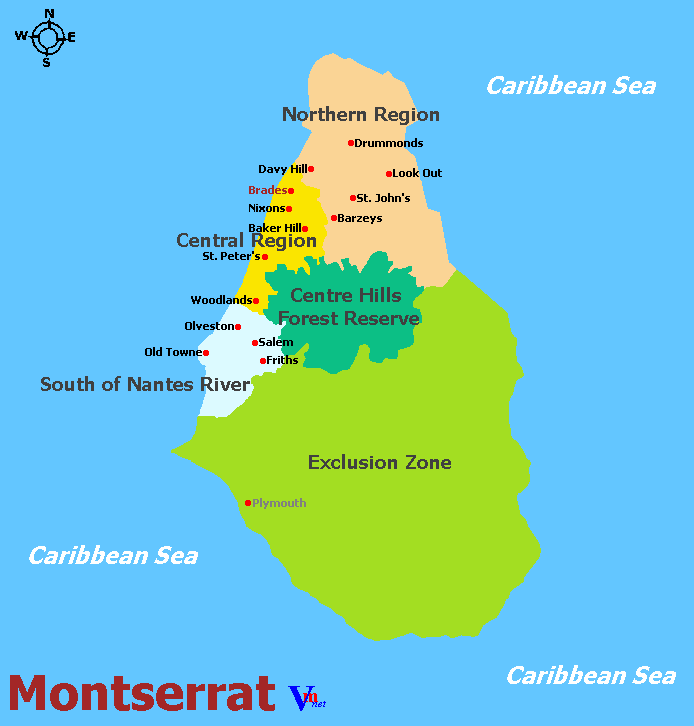
Montserrat is a British Overseas Territory located in the Lesser Antilles. Known as the "Emerald Isle of the Caribbean," the island is unique for its strong Irish heritage, a legacy that remains visible in local culture, place names, and annual celebrations.
The island's modern history has been heavily shaped by the Soufriere Hills volcano, whose eruptions beginning in the 1990s dramatically altered the landscape and led to the abandonment of the former capital, Plymouth.
Commercial grape wine production is extremely limited, and most wines consumed on the island are imported. Local beverage traditions are instead centered on rum, tropical fruits, and Caribbean hospitality.
Rum remains the most important alcoholic beverage associated with Montserrat.
Historically, sugar cane cultivation played a role in the island's economy, contributing to the development of rum consumption and local spirit traditions.
Today, imported Caribbean rums and locally prepared rum drinks are commonly enjoyed during festivals, social gatherings, and community events.
Montserrat is the only Caribbean island where Saint Patrick's Day is a public holiday and major cultural celebration.
This unique combination of Irish and Caribbean traditions has helped shape local food and beverage customs. During celebrations, rum punches, locally inspired cocktails, and festive drinks are commonly served.
The island's Irish connection distinguishes it from virtually every other territory in the Caribbean.
Montserrat's tropical climate supports a variety of fruits that are used in juices, punches, and homemade fermented beverages.
mangoSome residents produce fruit-based wines and infusions on a small scale, particularly for local consumption.
Montserrat's landscape is dominated by steep hills, volcanic terrain, and lush vegetation.
volcanic soilsWhile these conditions support tropical agriculture, they are generally unsuitable for commercial vineyard development.
Imported wines are available through restaurants, hotels, supermarkets, and hospitality businesses.
Common imports originate from:
FranceWine consumption is largely tied to tourism, expatriate communities, and special occasions.
The Soufriere Hills volcano remains one of the island's defining features. Visitors are drawn to volcanic landscapes, exclusion zones, and the partially buried remains of Plymouth.
This dramatic geological history has become an important part of Montserrat's identity and tourism industry.
Montserrat is not a wine-producing island, but it possesses a unique beverage culture influenced by Caribbean rum traditions, tropical agriculture, and a remarkable Irish heritage. The combination of volcanic landscapes, resilient communities, and distinctive cultural influences makes Montserrat one of the most unusual islands in the Caribbean.