
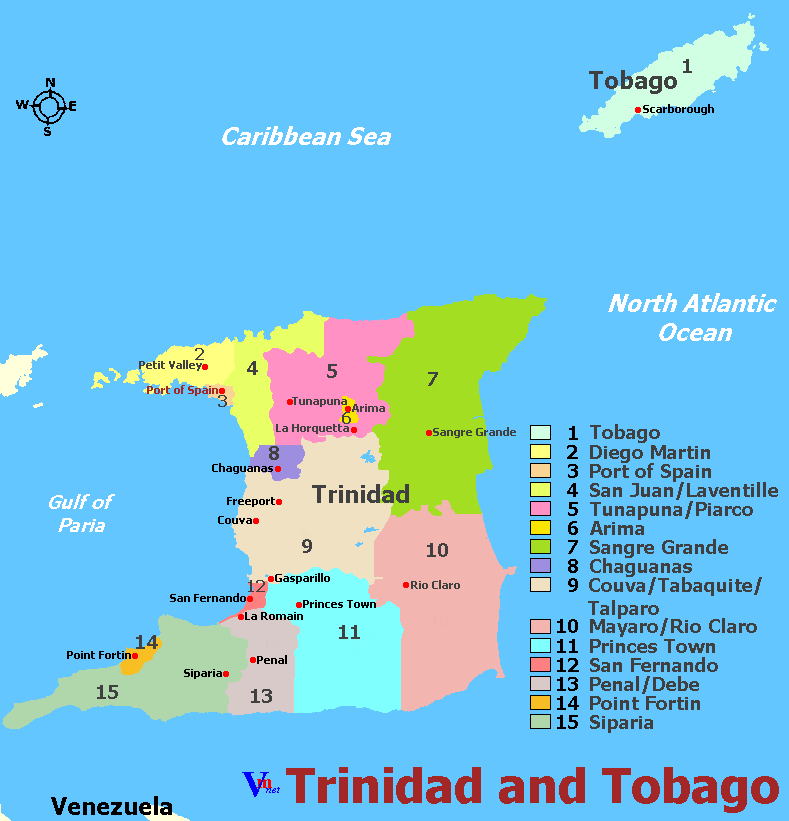
Trinidad and Tobago is the southernmost nation in the Caribbean, located just off the coast of Venezuela. The country's beverage culture is among the most diverse in the region, reflecting influences from African, Indian, European, Chinese, Middle Eastern, and Indigenous traditions.
While commercial grape wine production is limited, Trinidad and Tobago has built an international reputation through rum production, bitters, festive drinks, and a vibrant food culture. Most wines consumed in the country are imported, but local beverage traditions remain strong.
The nation's annual Carnival celebrations have also helped make many local drinks famous throughout the Caribbean.
No beverage is more closely associated with Trinidad and Tobago than Angostura.
Angostura Bitters
Originally developed in South America during the nineteenth century, Angostura Bitters eventually
became based in Trinidad. Today it is one of the world's most recognized cocktail ingredients and is
exported to more than 100 countries.
Angostura Rum
The House of Angostura also produces a range of internationally respected rums that have earned
numerous awards.
Few Caribbean nations have contributed more to global cocktail culture than Trinidad and Tobago through the success of Angostura products.
Rum remains one of the country's most important alcoholic beverages.
Historically, sugar cane cultivation played a major role in the economy, supporting the development of distilleries and rum production.
Today, locally produced rums are enjoyed both domestically and internationally.
Trinidad and Tobago is known for a variety of distinctive beverages.
Ponche de Creme
A rich holiday drink similar to eggnog, commonly enjoyed during Christmas celebrations.
Sorrel
Made from hibiscus calyces, spices, and sweeteners. During festive periods it is often served with or
without alcohol.
Rum Punch
Popular throughout both islands and commonly served during Carnival and social gatherings.
The country's tropical agriculture provides many fruits suitable for specialty beverages.
mangoFruit wines and fruit-based alcoholic beverages are occasionally produced on a small scale, although they remain secondary to rum.
Trinidad was historically famous for producing some of the world's finest cocoa. This agricultural heritage has influenced local beverages, chocolates, liqueurs, and specialty products.
The country continues to be recognized for high-quality cocoa production and related culinary traditions.
Trinidad and Tobago differs from many Caribbean islands because of its proximity to South America.
tropical climateThese conditions support diverse agriculture but are generally unsuitable for large-scale vineyard development.
Imported wines are widely available in restaurants, hotels, supermarkets, and specialty retailers.
Common imports originate from:
FranceWine consumption has grown steadily alongside the country's expanding hospitality and dining sectors.
Trinidad and Tobago is not a major wine-producing nation, but it possesses one of the Caribbean's richest beverage traditions. Angostura Bitters, award-winning rums, Carnival celebrations, tropical beverages, and diverse cultural influences have created a beverage identity that extends far beyond the region and is recognized around the world.