
Arizona is an emerging wine-producing state in the southwestern United States, with vineyards located in higher-elevation areas that provide more suitable conditions for grape growing. Although the state has a hot desert climate overall, its wine regions benefit from altitude, cooler nights, and seasonal rainfall patterns.
Wine production in Arizona has expanded significantly in recent decades, with a growing number of wineries and increasing recognition for quality wines. The state is known for its distinct desert-influenced viticulture and diverse grape plantings.
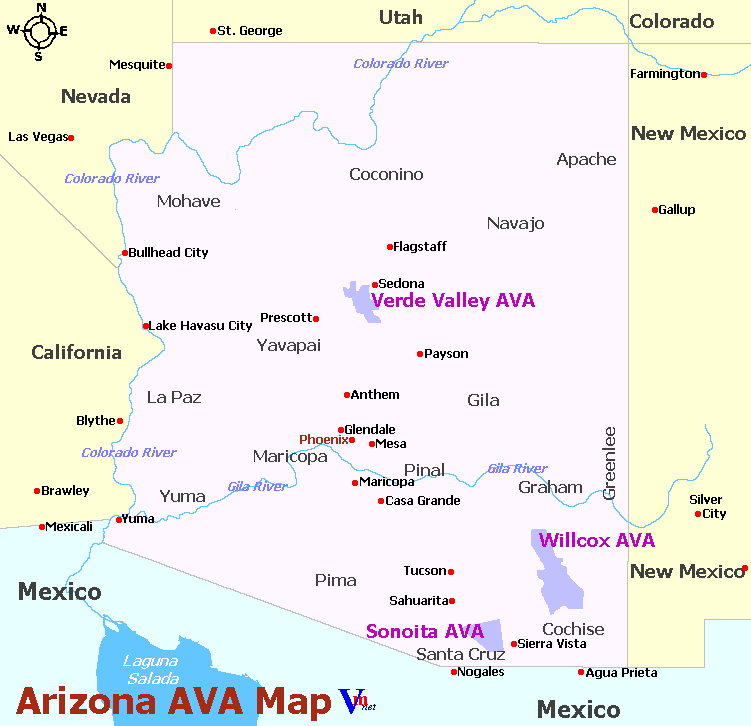
Arizona has three officially recognized American Viticultural Areas (AVAs):
Willcox AVA
Located in southeastern Arizona, this is the largest and most important wine region in the state. It accounts
for the majority of vineyard acreage and grape production.
Sonoita AVA
Located south of Tucson, Sonoita is Arizona's oldest AVA and is known for its rolling grasslands and
moderate elevation.
Verde Valley AVA
Located in north-central Arizona near Sedona, this region benefits from higher elevations and diverse
microclimates.
In addition to the AVAs, wine production is concentrated in several key areas:
Willcox area
Sonoita-Elgin area
Verde Valley
Sedona area
Arizona vineyards grow a wide range of grape varieties suited to warm climates and high elevation conditions.
Key red grapes:
Syrah
Grenache
Tempranillo
Cabernet Sauvignon
Key white grapes:
Viognier
Chardonnay
Sauvignon Blanc
Roussanne
Arizona produces a range of wine styles:
full-bodied red winesMany wines reflect warm-climate characteristics balanced by altitude-driven acidity.
Arizona viticulture is influenced by:
high elevation vineyards
desert climate with significant temperature variation
monsoon season rainfall
dry conditions requiring irrigation
These conditions create a unique environment for wine production in the southwestern United States.
Arizona is a rapidly developing wine-producing state with three established AVAs and expanding vineyard areas. Its combination of elevation, climate, and diverse grape varieties supports a growing and increasingly recognized wine industry.