
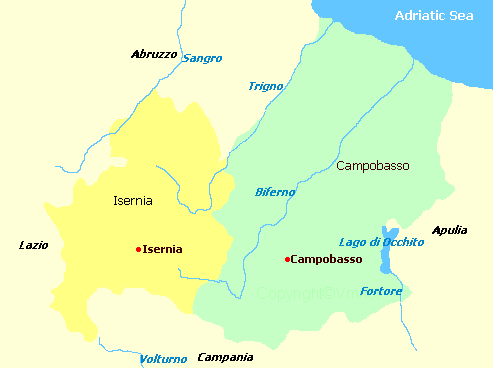
Molise is a small region in southern Italy, located between Abruzzo to the north and Puglia to the south, with a short coastline along the Adriatic Sea. It is one of Italy's least-known wine regions, with modest production and a focus on local grape varieties.
The region's landscape includes coastal plains, rolling hills, and inland mountainous areas. Vineyards are mainly located on hills where conditions are more suitable for grape growing.
Molise produces a mix of traditional and modern wines, often in small quantities.
Molise follows the Italian DOC and IGT classification system.
DOC (Denominazione di Origine Controllata)
Controlled production areas with defined geographic boundaries and grape varieties.
IGT (Indicazione Geografica Tipica)
Flexible category allowing broader styles and grape selection.
Wine production is spread across the region, with vineyards mainly located in central and coastal areas.
Key areas:
Campobasso
Isernia
Termoli
Molise DOC
The main DOC covering the entire region, producing red, white, and rosé wines.
Biferno DOC
A key wine area producing red blends based on Montepulciano and Aglianico, as well as white wines.
Pentro di Isernia DOC
A smaller inland DOC producing a range of wine styles.
Key red grapes:
Montepulciano
Aglianico
Sangiovese
Key white grapes:
Trebbiano
Bombino Bianco
Molise produces a range of wine styles:
medium-bodied red wines
fresh and simple white wines
rosé wines
traditional regional blends
Viticulture in Molise is influenced by:
Mediterranean climate near the coast
continental influence inland
rolling hills and moderate elevations
warm summers and cooler inland temperatures
These conditions support balanced grape ripening and traditional wine styles.
Molise is a small and relatively unknown Italian wine region, producing modest quantities of wine with a focus on traditional grape varieties. Its DOC wines, especially Biferno, reflect the region's mix of coastal and inland influences.